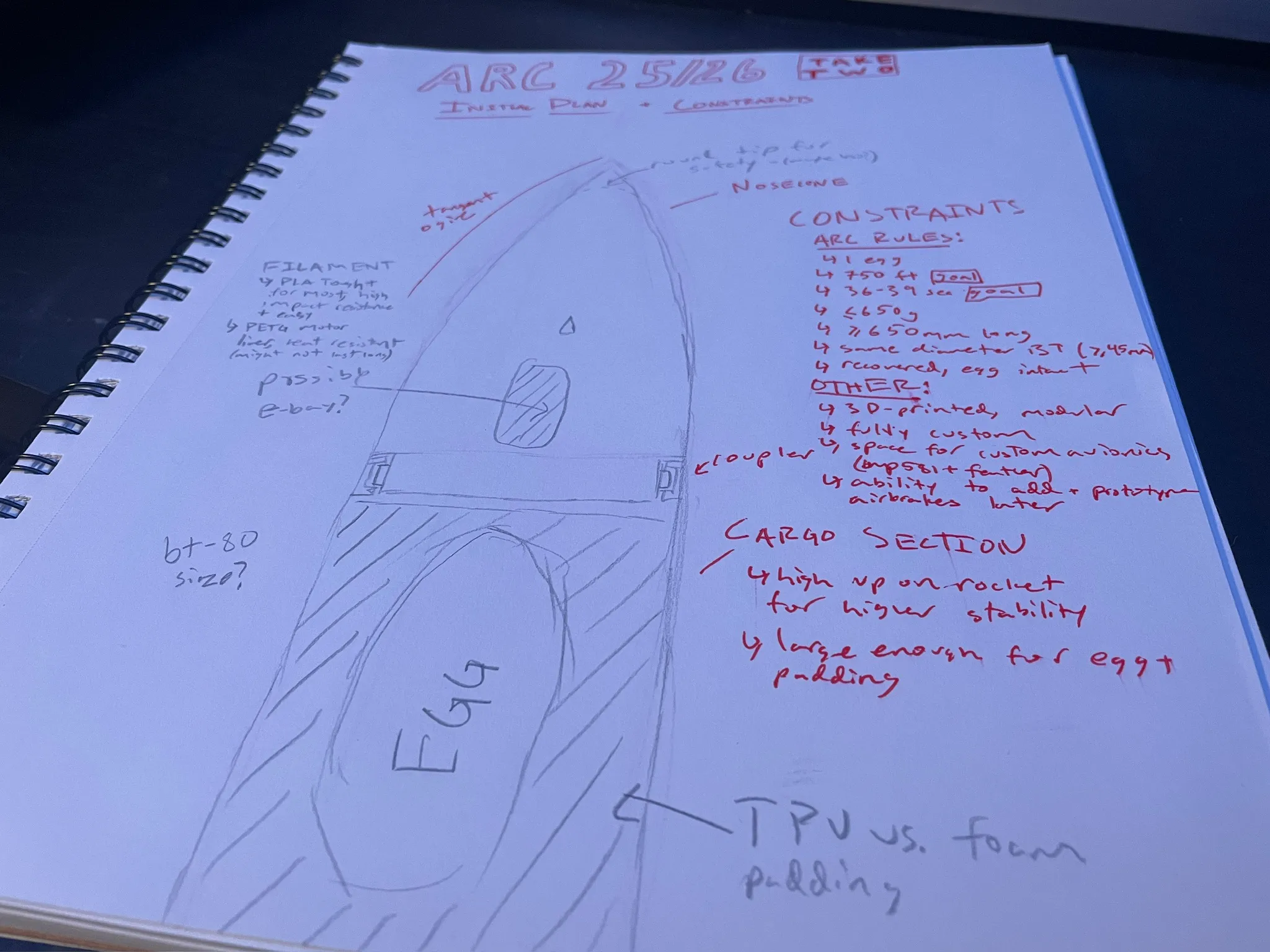
Plan
Every rocket starts with a plan. We usually begin with a fun concept or a specific competition in mind. We sketch out the general shape, figure out our constraints (like competition rules, budget, or materials), and set our goals. Each build usually has one or two main objectives. For example, our Mk. 48 kits are designed to be an exciting, reliable introduction to the hobby, while an ARC competition rocket is engineered strictly to score well!
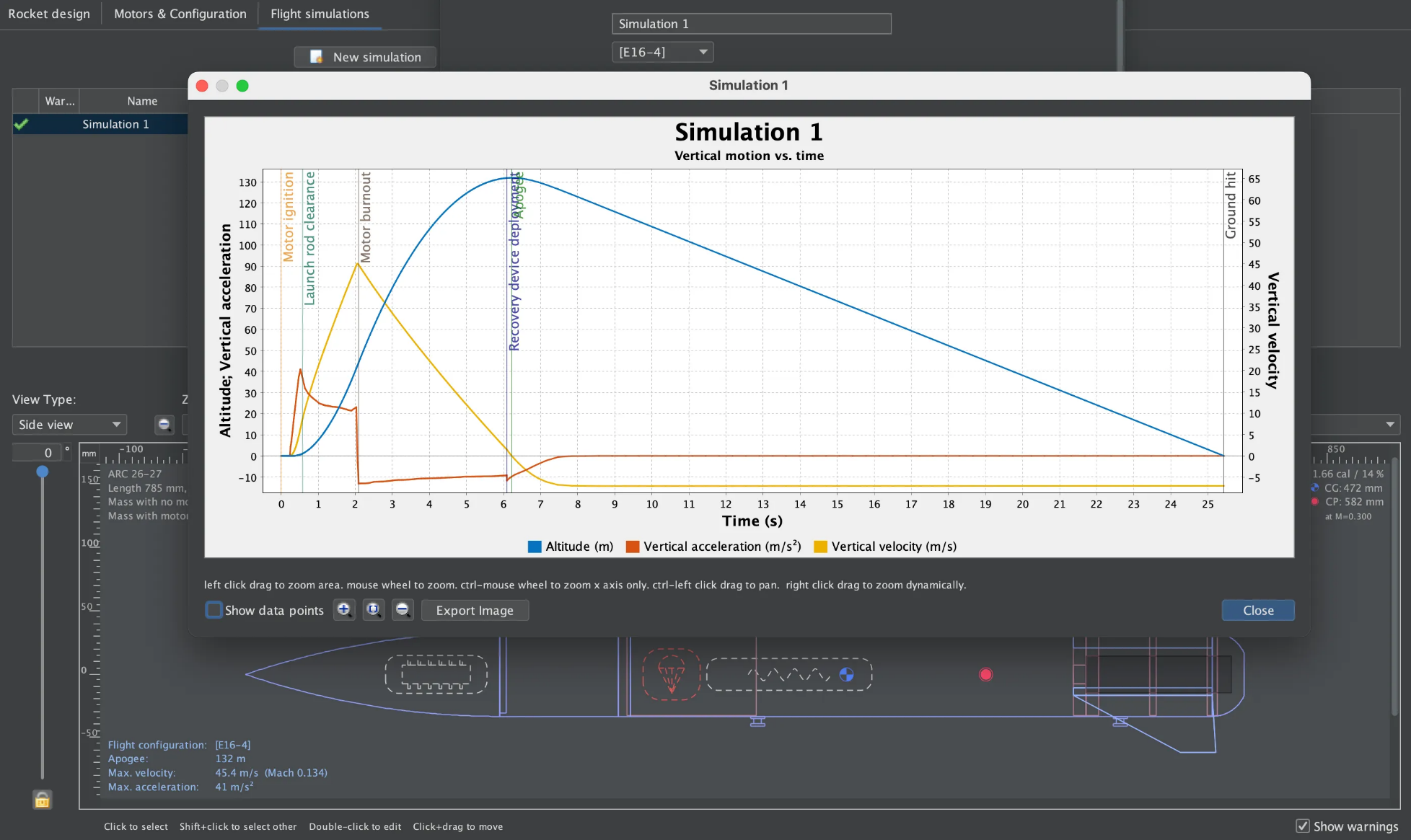
Simulation
Next, we bring the design to life in OpenRocket. This software lets us enter exact dimensions for pretty much every part of the rocket—body tube lengths, fin sweeps, nosecone shapes, and more. From there, we simulate flights using different motors to see if we can hit our targets. We spend a lot of time iterating on the design—tweaking small details to ensure the rocket will be stable, safe to launch, and easy to recover. While we can't model every tiny detail (like how the gaps between 3D-printed sections affect drag), OpenRocket is an incredibly powerful tool that helps us understand exactly how a rocket will perform before we even start printing.
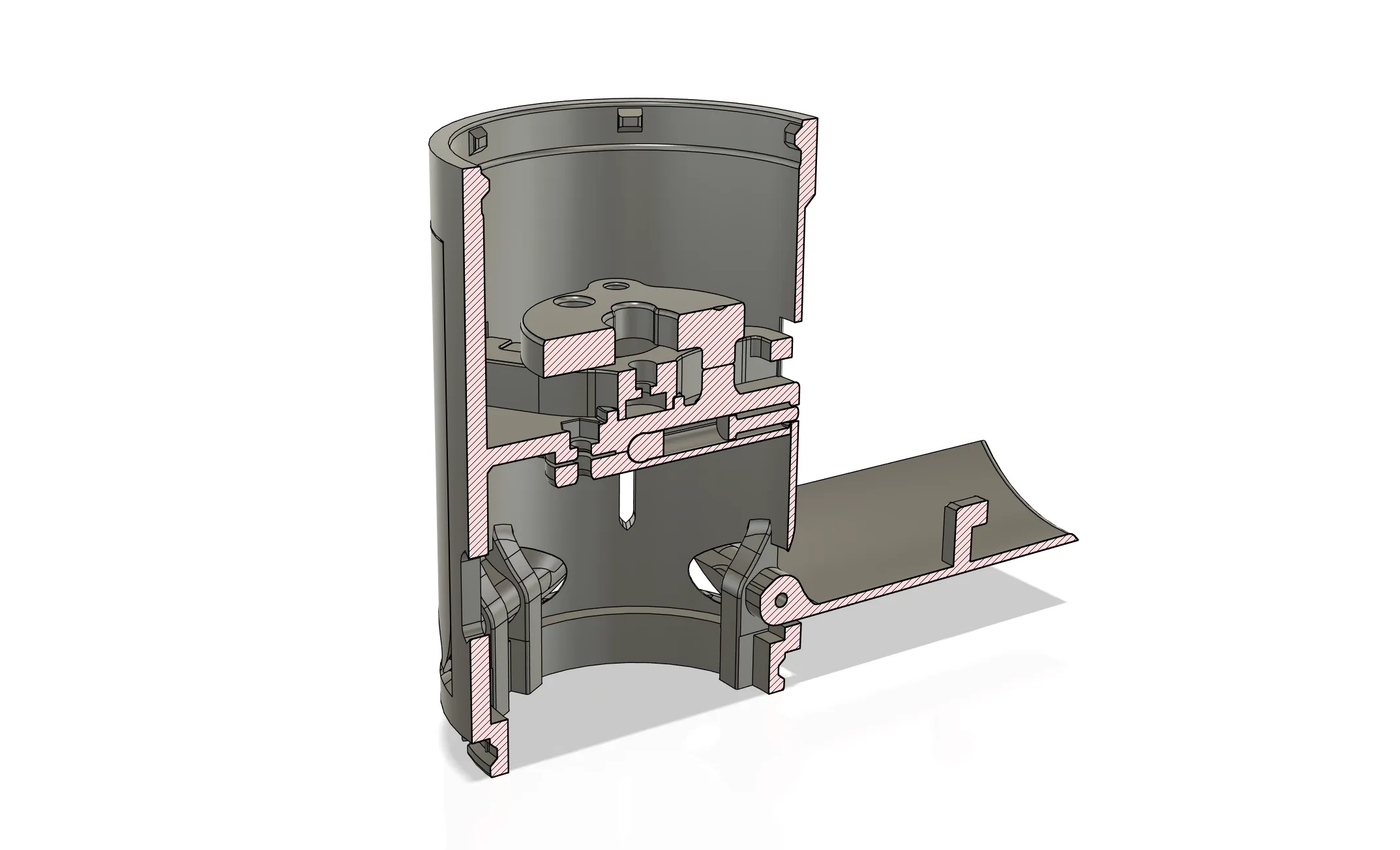
CAD
Once the math checks out, we move on to the custom hardware. We use Computer-Aided Design (CAD) software like Autodesk Fusion or Onshape to 3D model specialized parts. Often, we'll model the entire rocket virtually to see exactly how everything fits together. For our larger builds, we print custom nosecones and fin cans, keeping everything as modular as possible so we can easily swap parts and improve the design. Throughout this step, we constantly update our OpenRocket file to reflect the final CAD weights and dimensions, ensuring the rocket remains adequately stable.
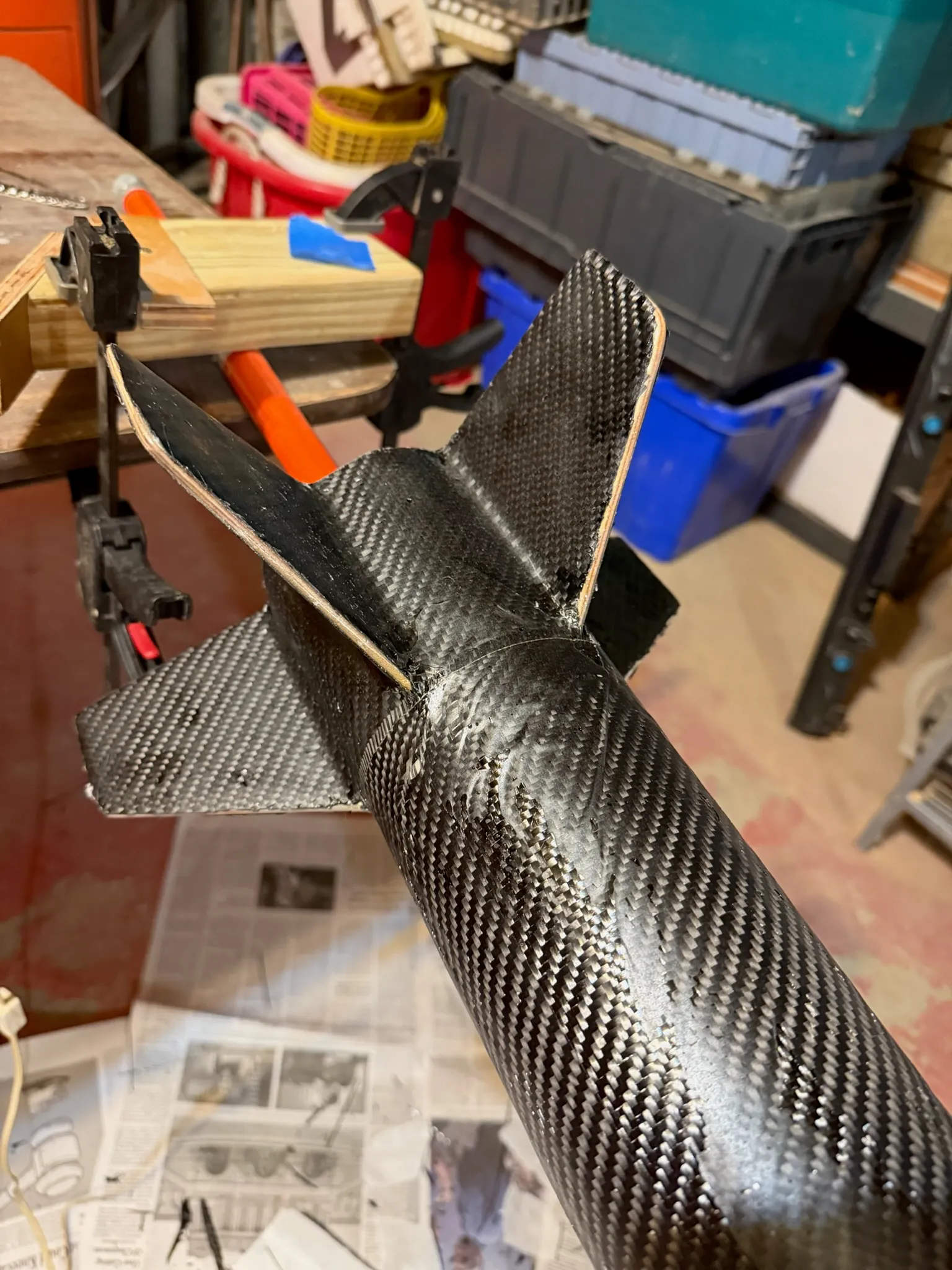
Assembly
This is where it all comes together! We fire up the 3D printers, cut our body tubes to length, and gather our hardware. Depending on the build, we might use epoxy to permanently attach parts, or we'll use screws and inserts so components can be easily replaced if something breaks. Once everything is structurally sound, we give it a custom paint job (because launching a cool-looking rocket is half the fun!), and pack up for the field.
Launch!
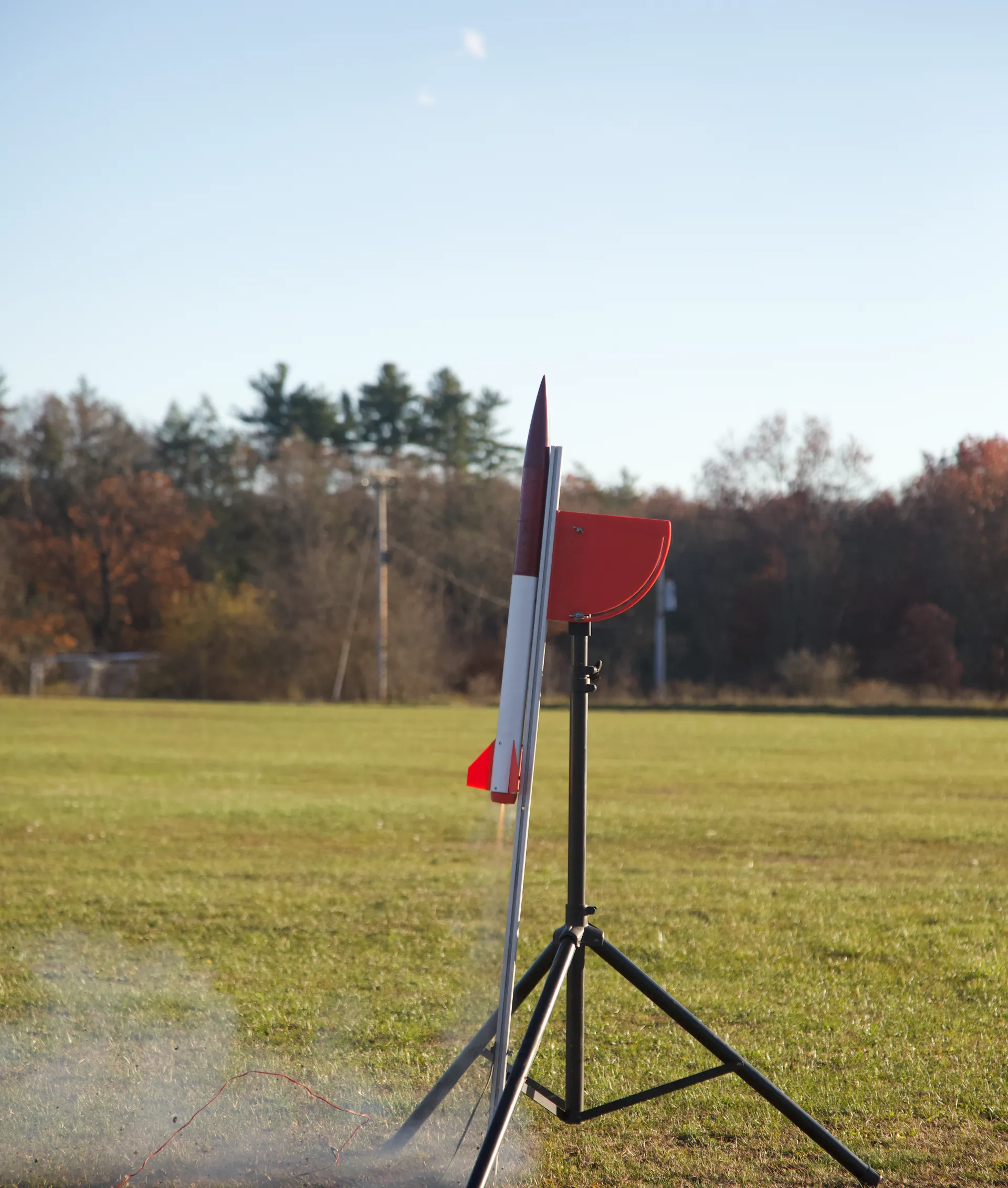
We launch locally with CMASS or head out on our own, picking the launch site based on how high the rocket is going to fly. Each rocket is packed with fireproof recovery wadding and an adequate parachute (calculated back in step two!). For our larger rockets (like the ones for ARC), we also load in custom electronics packages to collect altitude data. We actually build and code these altimeters ourselves using parts from Adafruit. Check out the photos and videos of our latest launches on our Instagram!
Our Instagram